
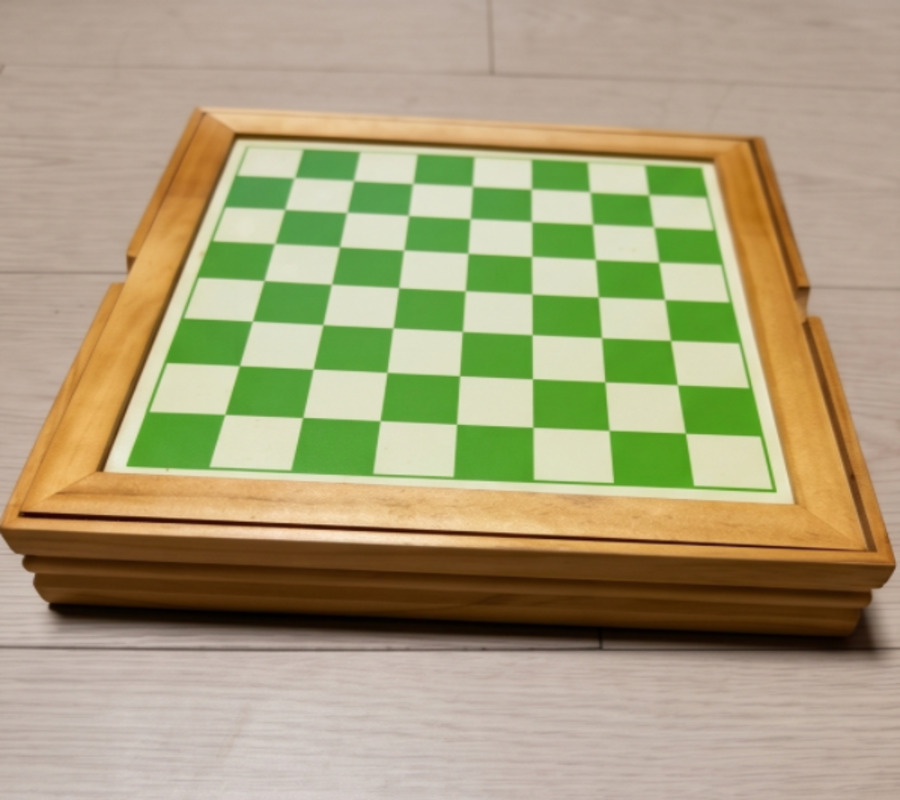
[yunhe xinliye chess factory ]
Flaws are extremely expensive.
Any tiny gap on a chessboard is lost output. Wasted manpower. Lost profit.
I have spoken with many overseas buyers and brand owners; they feel confident about the wood material but become frustrated when they see imperfections at the borders of the black and white squares.
Traditional black and white square stitching processes often consume too much time.
Workers have to stop and align them.
Sanding teams need to repair them repeatedly.
Production schedules get ruthlessly pushed back.
Semi-finished boards pile up there, unable to do anything.
And for the owner of a B2B export factory, this seemingly quiet waiting is actually highly costly.
My answer is Robert from yunhe xinliye do Foldable Rotating Portable Travel wooden Chess but how do make the black and white squares on a chessboard?
At our factory, we optimized high-precision veneer marquetry to complete the seamless stitching of black and white squares with extreme efficiency.
The goal is simple: reduce rework time, improve manufacturing efficiency, and keep the production line running smoothly.
With optimized precision cutting structures and scientific clamping designs, our customers will spend less time dealing with complaints and more time expanding the market.
For chess manufacturing, that becomes an important milestone in real productivity.
And yes.
Efficient, zero-gap stitching sounds bold.
Until you see the process with your own eyes.
Then suddenly, you will feel that the traditional manual alignment method is like waiting for a kettle to boil.
Why Has Black and White Square Stitching Always Been a Production Bottleneck?
Wood is a living material. They swell. Shrink. Are affected by moisture.
They deform every day. Naturally, they are hard to fit perfectly.
That is normal. The problem is not the characteristics of the wood itself.
The problem is the time required by traditional craftsmanship to overcome these characteristics.
Traditional designs usually require: Repeated manual sanding and adjusting Tedious glue application and waiting Extra heavy clamp pressure Long curing cycles That adds production pressure.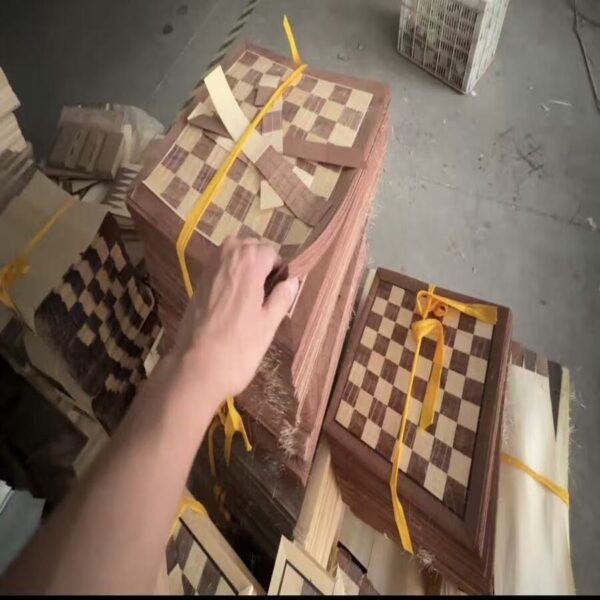
According to efficiency reports in the wooden toy and board game manufacturing industry, unplanned repairs and long stitching waits remain among the biggest operational costs in processing.
I strongly believe that. Because my European and American clients mention this issue constantly.
When the same issue keeps appearing, a manufacturer should solve it. Not simply accept it.
How Did We Achieve Efficient and Zero-Gap Marquetry?
This took design discipline. And several rounds of testing.
At our factory, we redesigned the veneer stitching process around the workers’ operational workflow.
That matters.
Because a smart production line should respect the workers operating on it.
Our core process upgrades include:
Strict wood kiln-drying to control moisture
High-precision laser/CNC cutting to ensure uniform dimensions
Optimized positioning clamp structures
A more even, eco-friendly glue application system
Fewer secondary repair steps
Every detail saves seconds.
Seconds become minutes.
Minutes become actual production.
Actual tests from our workshop show that workflow-based stitching design significantly reduces the production time for a single board.
That aligns with our field experience.
Simple engineering optimization often creates the biggest gain.
No one misses those extra rework steps.
Absolutely no one.
Why Does Faster Marquetry Craftsmanship Directly Increase Production Efficiency?
Because factories create value when they are running.
Not when waiting to cure. Faster black and white square stitching means: Higher yield rates. Greater throughput.
Less manual intervention. Better scheduling plans.
Lower quality control pressure. In busy production peak seasons, this is especially important.
If a production line stops a few times a week due to stitching errors, small delays become huge losses.
Production metrics reports show that improvements in yield and efficiency can create considerable annual production growth.
That makes sense.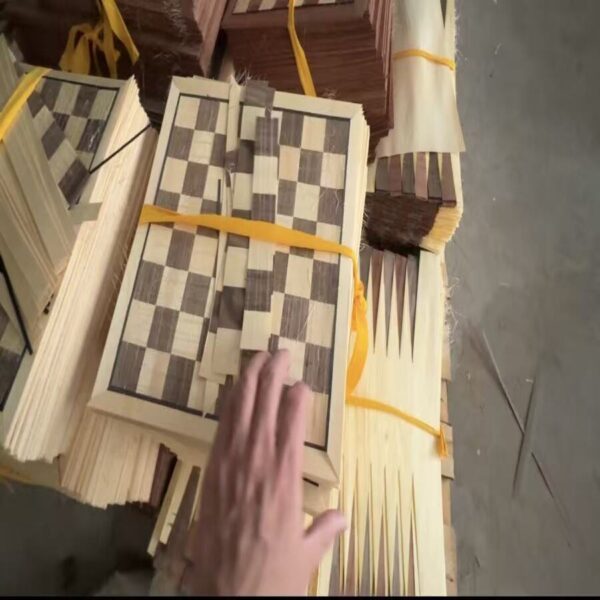
If machines and workers run for more hours, they produce more products.
No complicated theory.
Just practical manufacturing experience.
Traditional manufacturing still follows one rule:
Keep the production line running continuously and stably.
That principle never gets old.
Does Efficient Stitching Affect the Stability and Flatness of the Chessboard?
Good question. And a very important one. If the chessboard warps or cracks, speed means nothing.
We refused that compromise.
Our process locks the veneer securely.
Maintains extremely high stitching precision.
The baseboard stress remains balanced. The eco-friendly lacquer coating provides ultimate protection.
And supports long-term durability.
In testing, black and white squares treated with this process remained flat even under extreme humidity and temperature changes.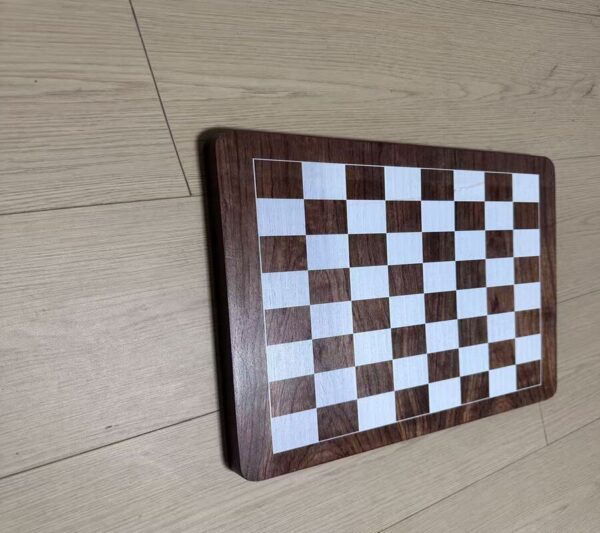
That matters.
Because stable stitching supports:
Uniform appearance standards
Smoother surface touch
Longer service life
Reduced returns caused by cracking
“Fast” should not feel rushed.
“Fast” should feel like everything is under control.
That is our approach.
Efficient.
Accurate.
Reliable.
Which Products Benefit Most from This Efficient Technology?
Quite a few.
Especially high-demand board games with strict quality requirements.
Examples include: Traditional wooden chess sets Tactile board games 7-in-1 game collections High-end solid wood storage boxes Backgammon with complex marquetry These products keep the production line active.
And an active line requires a reliable manufacturing rhythm.
When export order volumes are high, fast, consistent board manufacturing becomes a major operational advantage.
Importers handling bulk purchases for European and American regions will appreciate this immediately.
Less delivery waiting.
More trust.
More predictable shipping cycles.
And happier purchasing managers.
How Does This Improve Long-Term Supply Chain Management?
Chessboards manufactured with highly efficient, precise processes have a longer life cycle. That is something I strongly believe.
When production becomes difficult, quality control easily suffers from oversights.
When quality control suffers, customer complaints increase. Then costs rise.
Efficient marquetry processes encourage standardized quality inspections.
This protects the product’s reputation. And supports long-term market sales plans.
Routine large-scale procurement becomes highly practical. Not full of unexpected delays.
This is old-school manufacturing wisdom.
Respect the craftsmanship. Craftsmanship will also reward production.
Why Does This Matter for Global Board Game Buyers?
Because time affects every department.
Production.
Sales.
Scheduling.
Shipping.
Inventory.
When factory-side delivery (especially from Chinese manufacturers) becomes faster and quality becomes more stable, everything downstream becomes easier.
Importers focused on the German, Swedish, or US markets particularly benefit from this.
Lead times shorten.
Commitments to consumers are kept.
Peak season capacity planning improves.
Purchasing managers gain more control.
At our factory, we design products for daily commercial reality.
Not just for beautiful brochure photos.
A factory must run.
Produce efficiently.
Load containers on time.
And consistently deliver high-quality products.
That is what overseas clients pay for.
Frankly, that is also what a responsible factory should do, without any excuses.
What Does This Milestone Mean for Us?
For us, it is highly meaningful.
Because innovation should solve real production pain points.
Not just look impressive on paper.
High-precision veneer marquetry technology reflects our manufacturing philosophy:
Practical.
Durable.
Customer-focused.
Efficient.
It also reflects years of listening.
Buyers told us defective products and delayed deliveries are costly.
We listened.
Then we improved the cutting process.
Then we tested the kiln-drying technology.
Then we improved efficiency again.
Now, it is very mature.
I am proud of that.
Because production milestones should create measurable value.
Not just marketing gimmicks.
Though I admit—
“A perfect zero-gap black and white chessboard” does sound pretty satisfyin
At our factory, our high-precision marquetry and board manufacturing technology turns complex woodworking into a faster, smarter process.
Efficient black and white square stitching means less rework, shorter delivery times, and stronger capacity.
For modern B2B board game buyers, this milestone is practical, measurable, and built for long-term commercial win-wins.
so you have seen all word , you know that Seamless Veneer Marquetry Technology: How do we make the black and white squares on a chessboard?and Set a New Milestone in Production Efficiency? its became ture
 English
 French
 Spanish
 German